
 WhatsApp

Shoplifting Demand Letters in Florida: What You Need to Know
Did a store or its lawyer send you a letter asking for money after a shoplifting accusation? That letter is usually called a civil demand. It is a request for payment. It is not the same as a criminal charge.
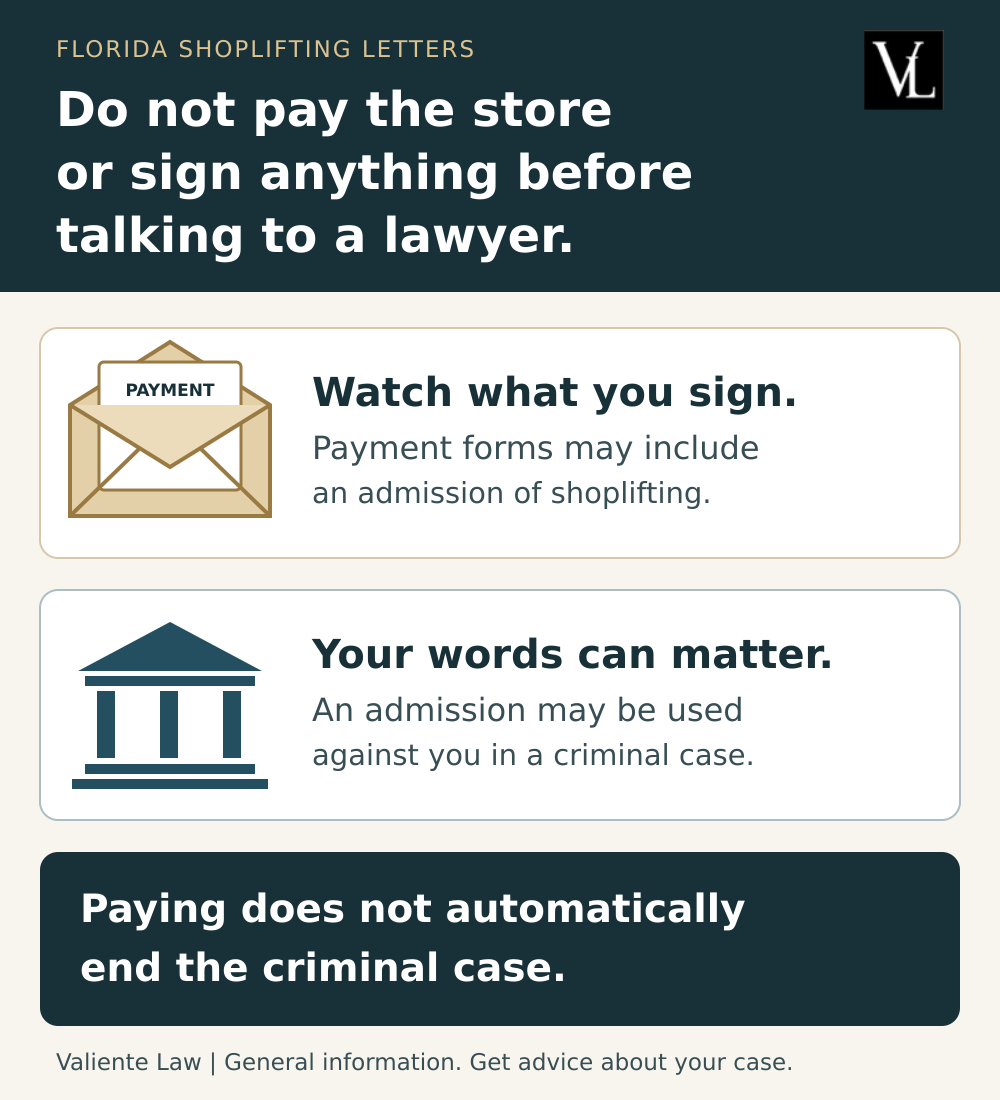
Do not pay the store, sign a statement or accept online payment terms before speaking with a lawyer. The paperwork may ask you to admit that you shoplifted. That admission may be used against you in the criminal case, even though the store’s demand is a separate matter.
Paying the store also does not automatically end your criminal case or cancel a court date.
This guide explains the difference and what to bring to a lawyer. For help with the charge itself, see our Miami petit theft and shoplifting defense page.
Why should I talk to a lawyer before paying?
A payment request may come with a form to sign or terms to accept online. Those terms may say that you admit taking the items or committing shoplifting. Do not treat that language as routine paperwork.
Under Florida’s evidence rules for a party’s own statements, an admission may be used against the person who made it. A statement to the store can matter in a criminal case, not just a civil claim.
Whether a specific statement can be used depends on its wording, how it was made and the rules of evidence. Some settlement discussions have legal protections. Do not assume that every payment or signed form is protected just because it concerns a civil demand.
Have your lawyer review the letter, all forms and the online terms before you pay, sign or respond. If you already did, save copies and tell your lawyer exactly what happened.
What is a civil demand letter?
It is a letter claiming that you owe money because of an alleged theft. The letter itself is not a court ruling that you owe the amount requested.
Florida Statutes section 772.11 allows certain theft-related civil claims. Before filing that type of lawsuit, the person or business making the claim must send a written demand. The law describes a demand for $200 or three times the loss. Lawyers call the three-times amount “treble damages.” That does not mean every letter is valid or that you owe whatever it asks for.
Check who sent the letter, which store incident it describes and how the sender calculated the amount. If the letter looks suspicious, verify the sender through a separate, trusted source. Do that before using a payment link or sharing personal details.
What does the 30-day rule mean?
Under section 772.11, a person who meets the demand within 30 days after receiving it must get a written release. The release ends further civil liability to the sender for that specific incident. It does not dismiss a criminal charge.
Save proof of when you received the letter. Ask a lawyer to review the demand and what the release would cover before you act.
Court papers have their own deadlines. If you also received a summons or lawsuit, show those papers to your lawyer right away. Do not assume the letter’s 30-day rule is your deadline to respond to a lawsuit.
Three things that can come from one store incident
A store’s payment request, a criminal charge and court-ordered repayment are different:
- Civil demand: The store or another party asks you to pay money. The demand letter is not an order from a criminal judge.
- Criminal charge: The state accuses you of breaking the law. Paying the store does not, by itself, end that case.
- Restitution: A criminal court orders repayment for loss or damage covered by Florida’s restitution law. This is separate from a private payment request.
Florida law allows civil and criminal remedies to exist together. In plain English, resolving one part does not always resolve the others.
Keep proof of payments, refunds and returned items. Your lawyer can review whether a payment affects another claim or a restitution amount. Do not assume one payment covers everything.
What to do before you respond
- Keep the whole letter. Save every page, the envelope, emails and attachments. Keep copies of receipts and anything you signed at the store.
- Write down the dates. Note when the incident happened, when the letter arrived and when you must go to court. Mark any dates you are unsure about.
- Gather your records. Bring purchase and return receipts, bond papers and any notice to appear. A notice to appear tells you to come to court. Keep relevant messages without changing them.
- Get advice before paying or signing. A form or online payment term may include an admission of shoplifting. Have a lawyer review it before you accept it, even if you only want the letter to go away.
- Keep track of the criminal case. Confirm your case number and court dates with your lawyer or official court records. A store letter does not replace court instructions.
Do not post the letter or your version of the incident on social media. There is no rule that everyone should pay every demand or ignore every demand. The right response depends on the facts and the documents.
What if this is your first case?
Tell your lawyer if this is your first arrest. Also mention earlier cases, even ones that ended without a conviction. Ask which options may apply to you. Paying a store does not guarantee a dismissal, a clean record or a diversion program. Diversion is a program that may let an eligible person resolve a criminal case by meeting certain requirements.
What if you are not a U.S. citizen?
Tell your lawyer before you agree to a plea or other deal in the criminal case. A result that seems favorable in state court may still create immigration problems. A release from the store does not settle those questions.
Your criminal-defense lawyer and an immigration lawyer should review how the proposed outcome could affect you. The answer depends on your status, the charge and the terms of the deal.
Common questions about shoplifting demand letters
Can something I sign for the store be used against me?
Yes, it may be. A signed admission or a statement you accept online could become evidence in the criminal case. Have a lawyer review the wording before you sign or pay. The exact rules depend on the statement and the circumstances.
If I pay, will my criminal charge be dropped?
Not automatically. Ask your lawyer to confirm the case status. Keep following court instructions unless the court or your lawyer confirms a change.
Can I ignore a letter if I think it is wrong?
Do not throw it away or miss a deadline just because you disagree. Keep it and get advice about whether and how to respond.
What if I returned the items?
Keep proof of the return and the items’ condition. Your lawyer can check how that affects the claimed loss and whether the demand has a legal basis.
What if I already paid?
Bring the receipt, the letter, anything you signed and any online terms you accepted to your lawyer. Explain any statements you made. Ask whether you received the written release you should have. A payment confirmation alone does not explain which claims have ended.
What should I check before settling the demand?
Have a lawyer check the amount, who is making the claim and exactly which claims the written agreement will end. Keep the final agreement and proof of payment.
Is the store’s demand the same as restitution?
No. Restitution is repayment ordered in a criminal case. Show your lawyer both documents and all receipts so any overlap can be addressed.
What if I have not been arrested?
You can still have a lawyer review the letter. No arrest does not prove that there is no investigation or that no case could follow.
Talk to Valiente Law about a Miami-Dade theft charge
If you face a theft accusation in Miami-Dade County, bring the demand letter and court papers to your consultation. We can discuss the criminal charge and how the letter fits into your defense. Civil claims and immigration questions may require separate counsel.
See our Miami theft defense overview or request a free, confidential consultation. Call 305-764-5460. Se habla español. Falamos portugués.
This guide gives general information, not advice for your specific case. No result is guaranteed.
If you’re in trouble, then you call Valiente.
Posted in: Uncategorized