
 WhatsApp
Received a Federal Target Letter in Miami? What to Do Next
A federal target letter is a serious notice that prosecutors are investigating your possible involvement in a federal crime. It is not itself an indictment, an arrest warrant or a finding of guilt. It deserves prompt attention even if you have not been arrested and have no court date.
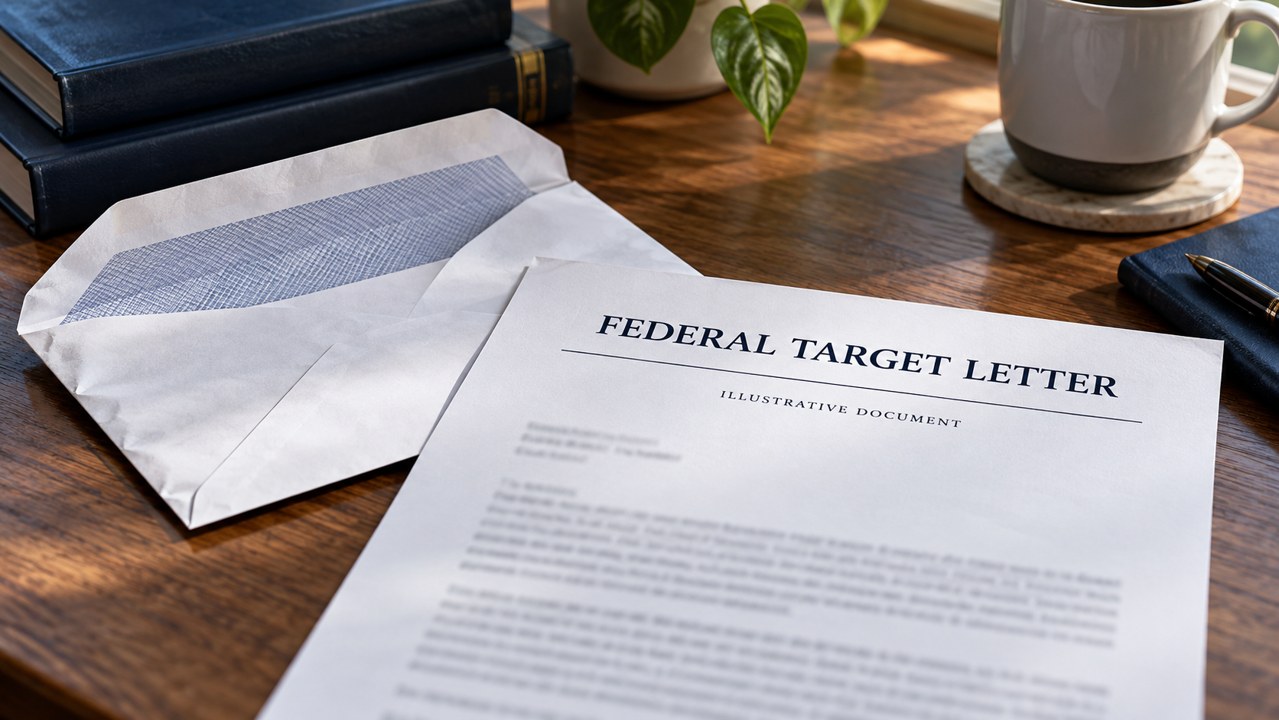
If the letter concerns an investigation in Miami or the Southern District of Florida, preserve the entire letter and envelope, note any deadlines and speak with federal defense counsel before responding substantively. Do not assume that an informal conversation with an agent is off the record.
What does “target” mean?
The Department of Justice’s grand-jury guidance distinguishes a target from a subject. A target is someone prosecutors view as a potential defendant based on substantial evidence linking that person to a crime. A subject is someone whose conduct falls within the investigation’s scope. Those descriptions do not establish guilt, and a person’s status can change.
A letter may identify the general investigation, advise about rights or request contact. Its exact wording matters. Counsel should review the actual document rather than rely on a label supplied by someone else.
A target letter, subpoena and indictment serve different purposes
- Target letter: communicates investigative status or related information. Read any requests or deadlines carefully with counsel.
- Subpoena: may require testimony or documents. It should not be ignored. Counsel can assess scope, objections, privileges and the appropriate response.
- Indictment: is a formal criminal accusation returned by a grand jury. It is still not proof of guilt.
The absence of a target letter does not establish that someone is safe from prosecution. DOJ guidance provides exceptions to advance notification. Conversely, receiving a letter does not mean an indictment is inevitable.
Practical steps after receiving the letter
- Keep the complete communication. Save attachments, the envelope and information about when and how it arrived.
- Record deadlines. Have counsel address them promptly rather than guessing whether a response is optional.
- Preserve relevant materials. Do not delete messages, alter records, discard devices or ask others to change or conceal information.
- Arrange confidential legal advice. Share the letter with counsel through an appropriate channel. Avoid public posts or group discussions about the allegations.
- Let counsel evaluate government contact. Before an interview, document production or proposed meeting, understand the legal risks and available protections.
The Federal Public Defender of South Florida’s pre-arrest guidance likewise emphasizes obtaining legal advice when you are a subject or target. An investigation may move quickly even when there is no publicly visible case.
Should I call the prosecutor and explain?
Do not assume that explaining immediately will resolve a misunderstanding. Counsel can first assess the notice, clarify the requested response and consider whether communication is appropriate. A voluntary interview can create evidence as well as provide information.
Be truthful in any communication with federal authorities. Do not guess, speculate or provide a false account. A lawyer can advise about your rights and obligations without your attempting to negotiate alone.
What can happen before charges are filed?
Depending on the matter, counsel may investigate relevant facts, preserve helpful evidence, analyze legal issues and communicate with the prosecutor about the client’s position. There may be requests for records or discussions about a potential resolution. Whether any such step is appropriate depends on the evidence and procedural circumstances.
A “proffer” or cooperation discussion is not automatically protected in every way. The written terms, potential uses of statements and obligations need careful review before any meeting. No lawyer can guarantee that early involvement will prevent charges or obtain immunity.
If arrest or surrender becomes an issue, counsel can also address the release process. Our federal detention-hearing guide explains how the court considers release pending trial.
Information to gather for counsel
Bring the letter, any subpoena or warrant, agents’ contact information, prior communications and a private chronology of relevant events. Identify where potentially relevant records are kept without changing them. Explain any business relationships that could create conflicts, including whether an employer’s lawyer has spoken with you. A lawyer representing an organization does not automatically represent every employee.
Frequently asked questions
Does a target letter mean I have already been charged?
Not by itself. Counsel should confirm the actual procedural posture and review any separate charging document.
Can I wait until an arrest to hire a lawyer?
Waiting can leave important requests or decisions unaddressed. Seek advice while the investigation is ongoing, especially when a deadline or proposed interview is involved.
Should I contact other people involved to compare stories?
Do not coordinate accounts or influence witnesses. Discuss relevant people and evidence with counsel, who can determine an appropriate investigative approach.
Does this guide cover a Florida state investigation?
No. Federal investigations follow different procedures. Our federal criminal-defense page provides related information for South Florida matters.
Talk with Valiente Law
For a free, confidential consultation about your case, call 305-764-5460 or contact Valiente Law. Se habla español. Falamos portugués.
General information, not legal advice for a particular case. Procedures and eligibility depend on the facts and current law.
If you’re in trouble, then you call Valiente.
Posted in: Criminal