
 WhatsApp
Miami-Dade Jail and TGK: Finding Someone and Understanding Bond
If someone you care about has been arrested in Miami-Dade County, start by confirming where the person is held and whether release is authorized. Finding a bond amount online does not, by itself, establish that the person can leave custody. Booking, court orders and other holds can affect the next step.
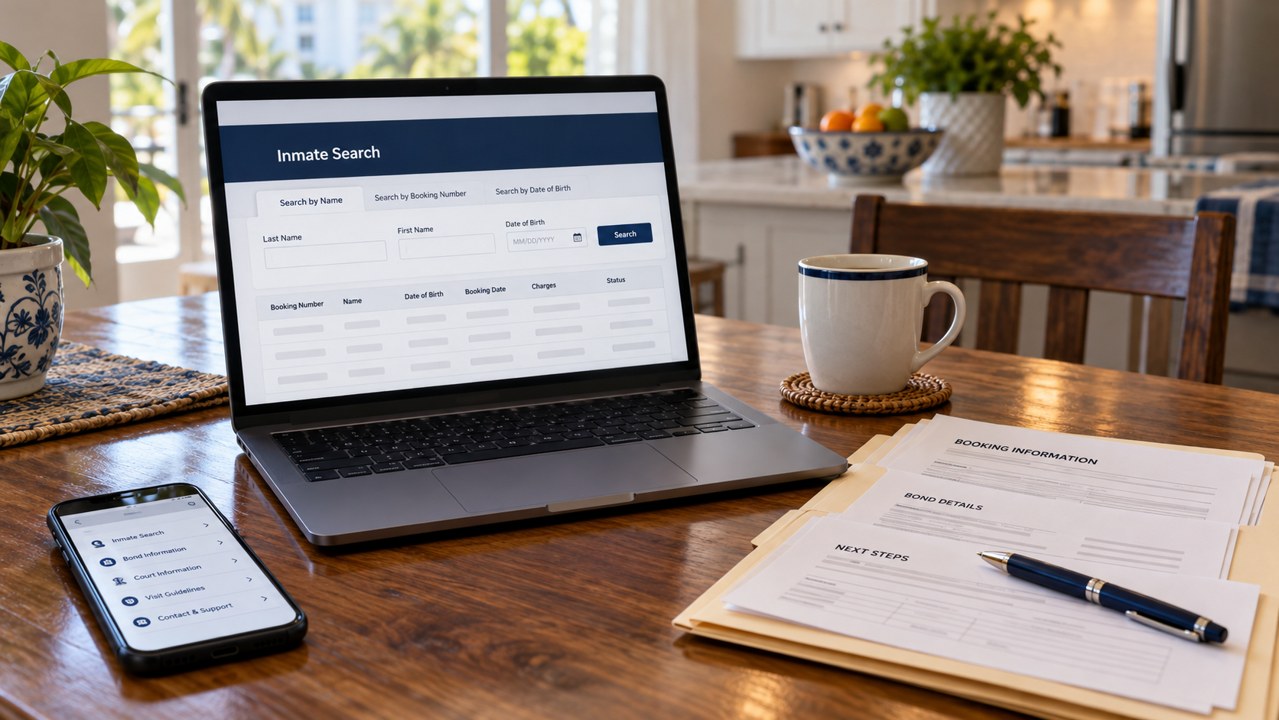
Start here: Use the official Miami-Dade inmate search. For county inmate information, Miami-Dade Corrections lists 786-263-7000. Have the person’s full legal name and date of birth ready. This is the county’s information number, not Valiente Law’s office.
1. Find the person and confirm the booking information
Search using the name as it appears on identification. When you locate a record, note the jail number, listed charges, housing location and any bond information. A recent arrest may not appear immediately. If the search does not return a match, contact Corrections rather than assuming that the person has been released.
Miami-Dade’s county search is not a complete directory of everyone held by federal authorities, immigration authorities or another county. Tell the lawyer which agency made the arrest and provide any paperwork or case number you received.
2. Understand what TGK means
TGK is the Turner Guilford Knight Correctional Center. The county identifies TGK as its designated inmate release center. The place where a person is housed and the place where a family should arrange pickup may differ. Before traveling, confirm the actual release location and current instructions directly with Corrections.
Do not rely on an estimated pickup time from an unofficial directory. The county’s inmate release information explains available release routes and operational details. A court’s release decision and completion of the jail’s release processing are separate steps.
3. Check whether bond can be posted now
Some people can be released after a bond is posted. Others must first appear before a judge, or have a hold or separate case that prevents immediate release. The Miami-Dade Public Defender’s adult case guide explains that domestic-violence arrests, probation violations and other circumstances may require a court appearance before release can be addressed.
Ask which charges have a bond, whether any charge or hold prevents release, and what payment procedure applies. A cash bond and a surety bond through a licensed bail agent involve different arrangements. Before signing a bail agreement, understand its premium, collateral, refund terms and financial obligations. A lawyer’s fee is separate from a bond or bail-agent charge.
4. Prepare for first appearance
Florida’s first-appearance process generally brings an arrested person who remains in custody before a judge within 24 hours. That does not mean everyone must be released within 24 hours. The judge addresses matters that include counsel and release conditions; the hearing is not a trial deciding guilt.
A family can help counsel by gathering reliable information about a proposed residence, employment, medical needs and practical support. Tell counsel about other pending cases, probation, protective orders and any known immigration issue. Do not conceal a problem because it seems unhelpful. Accurate information is necessary to evaluate a workable release request.
5. Follow the release order after pickup
Release can come with reporting requirements, travel limits, a no-contact order or other conditions. Read the paperwork carefully and confirm the next court date with counsel. A protected person’s invitation does not cancel a no-contact order. If a condition makes housing or childcare difficult, ask counsel about lawful options before acting.
For a domestic-violence case, also read what happens when the alleged victim does not want prosecution. For broader help, see our Miami criminal-defense services.
Questions families ask
Does posting bond guarantee immediate release?
No. Confirm that every required condition is satisfied and that no separate hold or case prevents release. Processing also takes time. Neither a lawyer nor a bail agent can promise a particular release time.
Should we discuss the arrest on a jail call?
Avoid discussing the facts of the case on ordinary jail calls or messages. Do not assume they are private. Arrange a confidential attorney consultation through the appropriate channel.
Will a county bond resolve an immigration hold?
Do not assume that it will. State criminal release and federal immigration custody are different matters. Tell defense counsel about noncitizen status so the relevant issues can be evaluated with immigration counsel when appropriate.
What if this is a federal arrest?
Federal release follows a different process. Read our guide to federal detention hearings in Miami and confirm the court and agency involved.
Talk with Valiente Law
For a free, confidential consultation about your case, call 305-764-5460 or contact Valiente Law. Se habla español. Falamos portugués.
General information, not legal advice for a particular case. Procedures and eligibility depend on the facts and current law.
If you’re in trouble, then you call Valiente.
Posted in: Criminal