
 WhatsApp

Do I Have to Talk to Police After an Arrest in Miami?
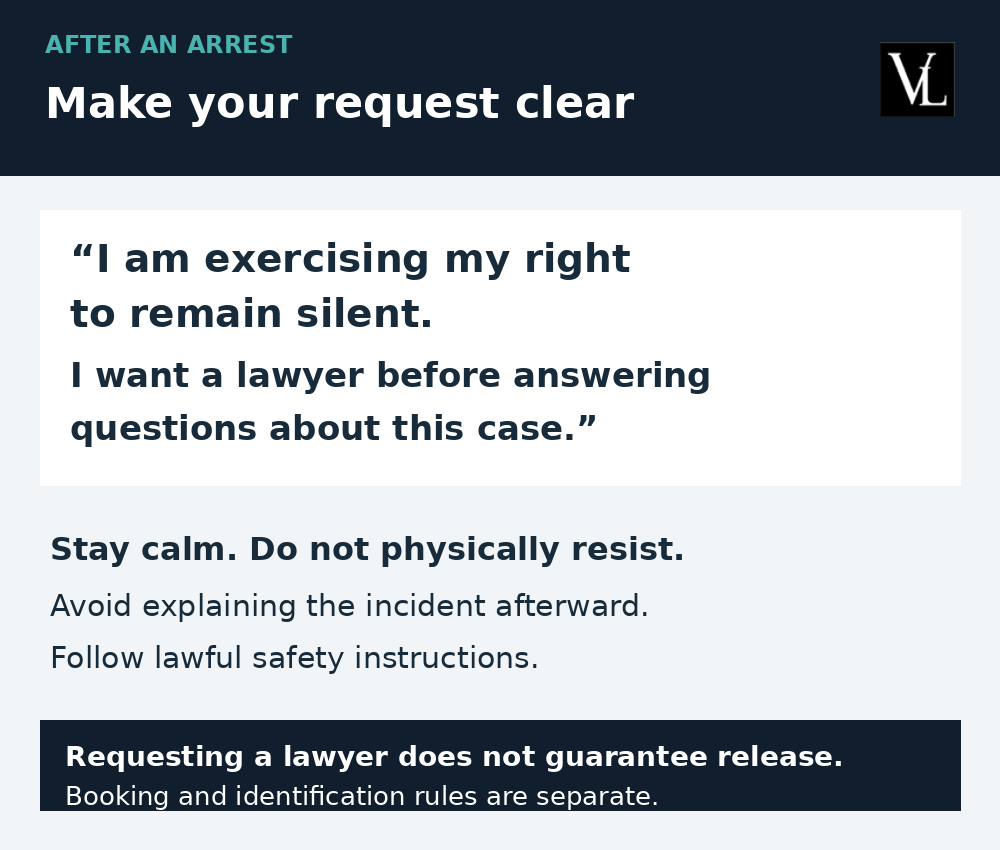
No. After an arrest, you do not have to explain the accusation to police. Tell them clearly that you want to remain silent and want a lawyer before answering questions about the case.
Stay calm and do not physically resist. The right to avoid answering questions about an accusation is different from refusing lawful safety instructions or routine identification procedures.
Facing a Miami-Dade criminal accusation? Call 305-764-5460 for a free, confidential consultation. Se habla español. Falamos português.
Say clearly that you want silence and a lawyer
You can say: “I am exercising my right to remain silent. I want a lawyer before answering questions about this case.”
Make the request direct. Do not rely on sitting quietly or saying that you might need a lawyer. After making the request, avoid explaining what happened, defending yourself or restarting a discussion about the incident.
This is a practical way to make your wishes clear, not a promise that officers will release you. Whether a statement can be used in court depends on the facts and the legal rules. Tell your lawyer exactly what you said and how officers responded.
When do Miranda warnings apply?
Miranda warnings generally apply when a person is both in custody and being interrogated. Custody can exist without a formal announcement of arrest. Interrogation can include more than direct questions about a crime. The circumstances matter.
Police do not have to read Miranda warnings during every encounter or immediately upon every arrest. A voluntary statement can create problems even if no officer asked a question. Do not assume that a conversation is harmless because you have not heard the warnings.
If police contact you before an arrest, get legal advice before agreeing to an interview about an accusation. This page focuses on adult criminal investigations and arrests in Miami-Dade state cases. Juvenile, traffic-testing and immigration procedures can raise different issues.
What about booking questions?
Officers may ask routine questions used to identify and book a person, such as name and date of birth. Courts treat some administrative booking questions differently from questions designed to obtain evidence about a crime.
Do not give a false name or false information. But do not assume that every question asked during booking is only administrative. If the questions turn to what happened, repeat that you want a lawyer before discussing the case. Tell counsel about any question you believed could incriminate you.
Why not explain my side right away?
You may feel sure that a short explanation will clear things up. You may not know what the officer has been told, what a recording shows or which facts could be used against you. A rushed answer can leave out context or create a statement that is hard to correct later.
Your lawyer can review the accusation and evidence before deciding whether, when and how to present information. This applies to a first misdemeanor as well as a felony. For a shoplifting allegation, keep receipts and other records for counsel instead of trying to resolve the criminal accusation through an unreviewed statement.
A store employee’s questions are not automatically governed by the same rules as police questioning. Our shoplifting civil-demand guide explains why you should speak with a lawyer before paying the store or signing documents that may contain admissions.
If you already spoke to police
Do not assume that the case is over or that every statement can be excluded. Tell your lawyer what you remember as accurately as possible:
- Where the conversation happened and whether you were free to leave.
- What warnings were given and whether you understood them.
- Whether you asked for silence or a lawyer, and the exact words you used.
- What officers said or did next, including any threats or promises.
- Whether there is a recording, written statement or signed form.
Preserve documents and messages in their original form. Do not delete evidence, ask anyone to change a story or contact a protected person in violation of an order. Your lawyer can assess whether there is a basis to challenge a statement.
Common questions
Does a missing Miranda warning mean my case must be dismissed?
No. A warning issue can affect whether a statement may be used, but it does not automatically dismiss a charge. The State may have other evidence. Counsel must review custody, questioning, warnings, any waiver and applicable exceptions.
Can I stop answering after I have already started?
You can clearly state that you want to remain silent and want a lawyer before further case questions. Do not assume that doing so erases earlier answers. Tell counsel about the entire conversation, including anything you said afterward.
What should I discuss on a call to family?
Keep the call focused on practical help, such as locating a lawyer. Do not assume that a police-car or jail conversation is private. Ask for a confidential way to speak with counsel before discussing the facts.
What if I am not a U.S. citizen?
Tell your defense lawyer privately about your status and any immigration concerns. State criminal outcomes and federal immigration consequences need separate review. Do not assume that a misdemeanor or a quick resolution is immigration-safe. Request language assistance if you do not understand the questions or paperwork.
Talk with a lawyer before discussing the accusation
Valiente Law can review a Miami-Dade state criminal accusation, the statements already made and the next steps. Learn more about criminal defense in Miami-Dade, or request a free, confidential consultation. Call 305-764-5460. Se habla español. Falamos português.
General information, not legal advice for a particular case. Follow court orders and seek advice about your own circumstances.