
 WhatsApp

Do I Need a Lawyer Before Pleading Guilty in Miami?
Yes. Talk with a criminal defense lawyer before you plead guilty, even if you want to accept responsibility and finish the case. A plea can affect more than jail time. You need to understand the charge, the evidence, the full sentence and what the result could mean for your future.
This matters for a first misdemeanor just as it does for a felony. If you are not a U.S. citizen, have the immigration consequences reviewed before deciding. A quick resolution is not always the right resolution.
Facing a Miami-Dade state criminal charge? Call 305-764-5460 for a free, confidential consultation. Se habla español. Falamos português.
Five questions to answer before entering a plea
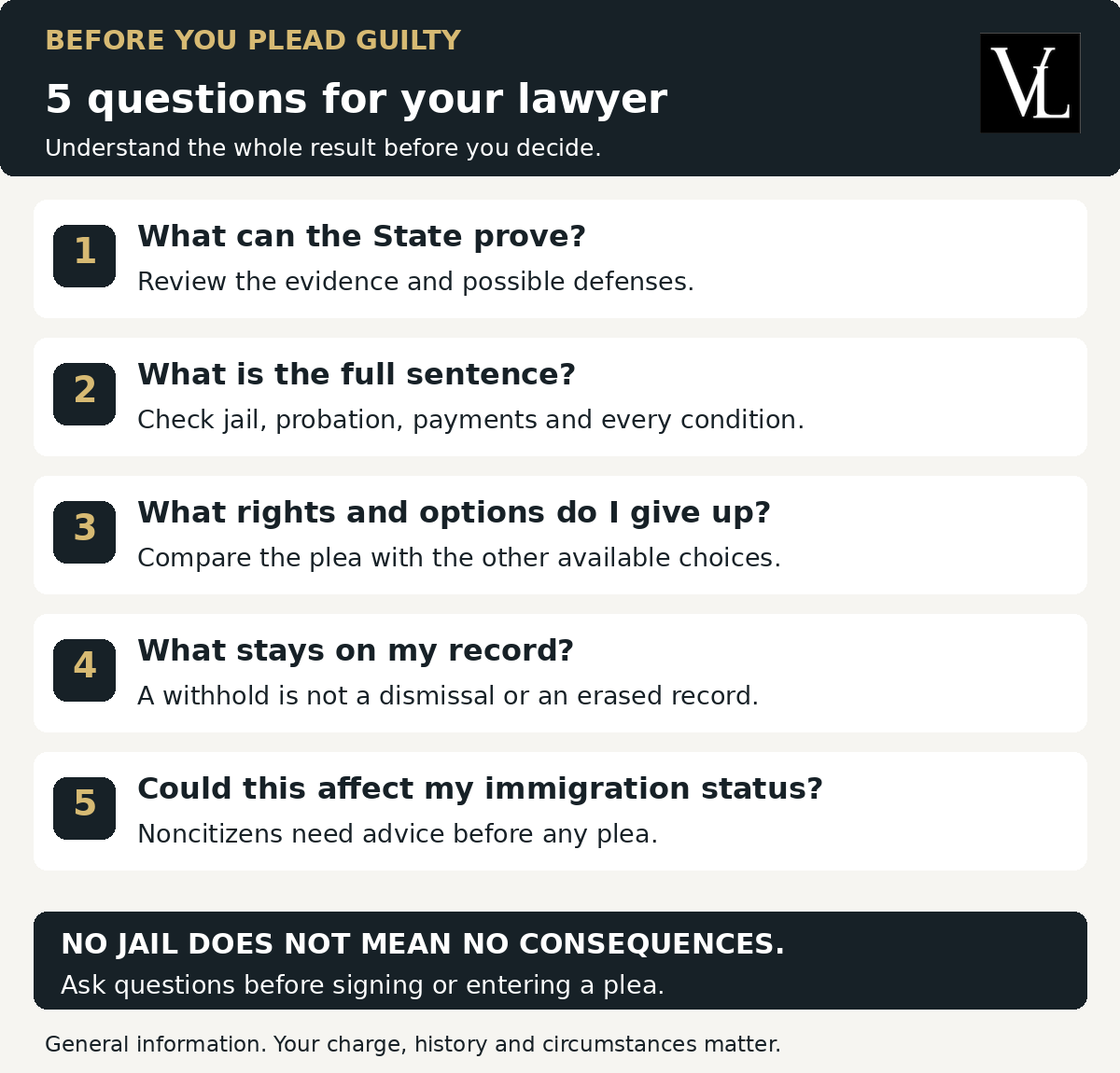
1. What can the State prove?
Tell your lawyer what happened and provide the documents you have. Ask what evidence supports the charge and what still needs to be checked. A lawyer can assess witness accounts, recordings, the arrest and possible defenses. Wanting to accept responsibility does not mean you should skip that review.
A paperwork mistake does not automatically end a criminal case. For example, a mistaken statute citation in an indictment or information does not require dismissal if it did not mislead the defendant in a way that harmed their defense. The effect of a defect depends on the document, the applicable rule and the facts.
2. What exactly am I agreeing to?
Ask for the complete terms in plain English. Which charge would remain? Is the offer tied to a specific sentence? What still depends on the judge? Review jail or prison time, probation, payments, classes, service hours and any restrictions that apply. Ask about deadlines and how you would prove completion.
Do not assume that an offer described as “time served” or “no jail” has no other costs or consequences. Bring up work schedules, childcare, transportation and other practical barriers before you agree to requirements you may struggle to complete.
3. What rights and options would I give up?
A plea usually ends the trial process and limits issues you can appeal. Before accepting it, the judge must check that the plea is voluntary and that you understand the charge, penalties, rights and agreement. That hearing is not a substitute for advice about your own case.
Ask your lawyer to compare the offer with defending the case and any other available options. Do not answer that you understand something when you do not. Ask for an explanation or language assistance before moving forward.
4. What would remain on my record?
Ask whether the proposed result includes an adjudication of guilt or a withhold of adjudication. A withhold is not the same as a dismissal or an erased record. Eligibility and effects vary. Tell counsel about prior cases and any work or licensing concerns that matter to you.
If this is a first offense, ask whether Miami-Dade diversion or PTI may be available. A clean record does not guarantee admission, dismissal or record relief. Review the actual agreement, including any required plea or admission, before signing.
5. Could this affect my immigration status?
If you are not a U.S. citizen, tell your defense lawyer privately before any plea. Ask for advice about the exact proposed charge and sentence, with immigration counsel involved when needed. A misdemeanor, no-contest plea, withhold or sentence without jail is not automatically safe for immigration purposes.
Florida’s plea rule warns that a guilty or no-contest plea can affect a noncitizen’s immigration status even when adjudication is withheld. State criminal outcomes and federal immigration consequences require separate review. A general warning from the judge does not tell you what will happen in your particular case.
What to bring to a plea review
- Your case number, charge paperwork and next court notice.
- The written offer, plea form or program agreement, if you have one.
- Prior case dispositions and current probation or release conditions.
- Relevant records or messages you already have. Preserve originals.
- A list of concerns about your job, license, travel, family or immigration status.
Keep attending required court dates and following existing orders. Do not assume that contacting a lawyer changes a hearing date or a condition of release.
Common questions about pleading guilty
Do I still need advice for a first shoplifting charge?
Yes. Review the evidence and available options before accepting a plea. A first case can still have lasting effects. Our Miami petit theft guide explains issues specific to shoplifting and first offenses.
Is pleading no contest a way to avoid consequences?
No. A no-contest plea allows the court to resolve the charge without a trial. It can still lead to a sentence and other consequences. Do not use the words “no contest” as a substitute for reviewing the actual result with your lawyer.
What if I cannot afford a private lawyer?
Ask the court whether you qualify for a public defender or other appointed counsel. Eligibility and the type of case matter. Do not assume that pleading guilty is your only choice because you cannot pay a private attorney.
Can I take the plea back if I regret it?
Do not count on that. The rules limit when a plea can be withdrawn, and timing matters. If you have already entered one and believe something was wrong, contact counsel promptly and provide the plea and sentencing records.
Talk through the decision before you plead
Valiente Law can review a Miami-Dade criminal charge and help you understand the choices in front of you. Call 305-764-5460 or request a free, confidential consultation. Se habla español. Falamos português.
Explore more criminal defense FAQs.
General information, not legal advice for a particular case. Results depend on the facts and applicable law.