
 WhatsApp
Florida Gun Laws
Miami Gun Charges Attorney
Although Florida has a storied history of gun ownership and advocacy — the right to bear arms is protected under the state and federal constitution — guns laws are strictly enforced. Moreover, the recent school shootings prompted the enactment of tough new gun control measures. While it may be legal to own and carry a firearm, as a gun owner it is crucial to understand the laws as well as the legal consequences of weapons violations. After all, ignorance of the law is never a defense so making sure you know the law is the first step in ensuring you do not break it.
Valiente Law has extensive experience protecting the rights of gun owners in Miami, Fort Lauderdale, West Palm Beach and throughout the state of Florida. Our criminal defense attorneys have a working knowledge of the applicable gun laws and a proven track record of successfully trying cases in state and federal court. If you have been charged with a weapons violation, our legal team will provide you with aggressive legal representation.
Nowadays in the political climate that we’re in gun laws are changing, everyday not just on the federal level but on the state level as well. And it can be confusing, and something that is legal today might not be legal tomorrow. And so it’s important to have a knowledgeable and experienced attorney like we are, who knows and we’ve done this literally hundreds of times. And we can help you use our experience, our expertise to stay on top of all of these laws to ultimately get the best possible outcome, whether it’s a dismissal of the charges, a reduction or not filing charges in the first place. You can count on us.
Call Us At 305.764.5460 For A FREE Consultation!
Who can own a gun in Florida?
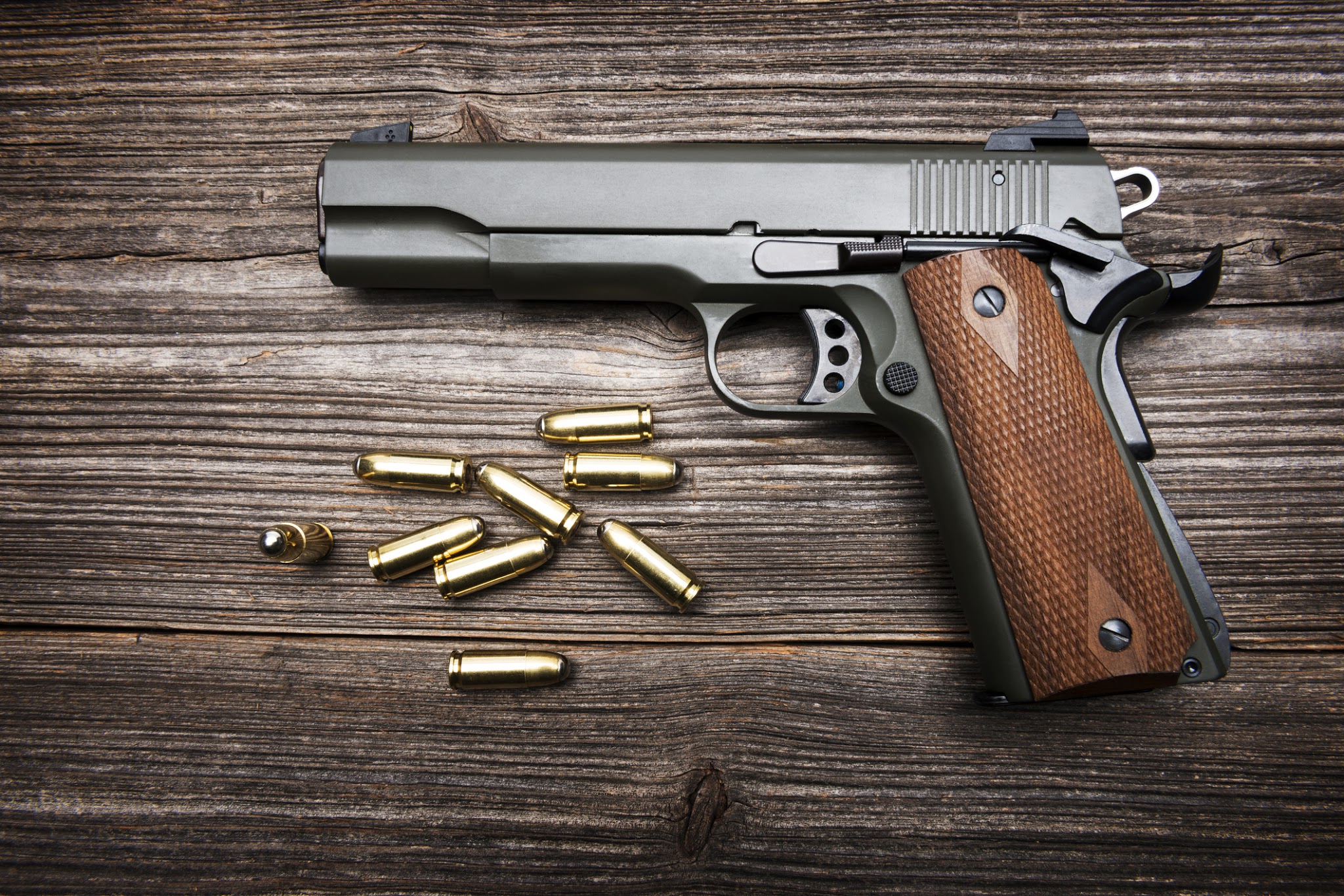 The right to own a gun in Florida is derived from the Second Amendment of the U.S. Constitution, and the state constitution holds that the “the right of the people to keep and bear arms in their own defense shall not be infringed, except that the manner may be regulated.” At the same time, the state has the authority to determine who can and cannot possess a firearm. In particular, certain individuals are not permitted to possess certain firearms, including:
- People whose felony convictions disqualify them under state or federal law, unless the required firearm rights have been restored;
- People subject to qualifying domestic-violence injunctions, risk protection orders or other disqualifying court orders, and people with qualifying domestic-violence convictions;
- People disqualified by applicable mental-health adjudications or commitments, unlawful controlled-substance use, or other state or federal prohibitions.
Age rules depend on the activity. Florida generally prohibits firearm purchases by people younger than 21, with statutory exceptions. That purchase restriction does not mean every person under 21 is forbidden to possess a firearm. Rules for minors, lawful possession, and eligibility to carry must be evaluated separately.
Because violations of Florida’s gun possession laws carry stiff penalties, including mandatory minimum sentences, significant jail time and fines, having an experienced gun law attorney in your corner is essential.
Florida firearm purchases and restrictions
The 2018 Florida legislation known as the Marjory Stoneman Douglas High School Public Safety Act. The law included the following purchase and equipment restrictions, subject to statutory exceptions:
- Minimum age — Florida generally requires a person to be at least 21 to purchase a firearm, subject to the exceptions in section 790.065(13).
- Waiting period — After a purchase, the gun owner must wait three days, or the time it takes to complete a background check, before obtaining a gun, whichever is longer.
- A Ban on Bump Stocks — Bump stocks, designed to enable semi-automatic rifles to fire more rapidly, mimicking an automatic weapon, are now prohibited.
The new measure also creates a “marshal program” that permits school superintendents and local sheriffs to arm and train certain school employees, including coaches, counselors, and librarians. The law also contains funding for beefed up security measures at schools, including hiring school-based police officers. It is worth noting that the provision regarding the new age requirement is being challenged in court on constitutional grounds.
Other Gun Offenses in Florida
The attorneys at Valiente Law are well-versed in numerous other weapons laws and routinely defend clients against the following gun offenses.
Concealed carry under current Florida law
Since July 1, 2023, eligible adults may carry a concealed weapon or firearm without a Florida concealed-weapon license. A license remains available. Under section 790.01, the State must prove both lack of a license and ineligibility under the listed criteria for a charge under its concealed-carry provisions. Carrying without a license is not, by itself, proof of a crime.
A person relying on permitless concealed carry must carry valid identification and display it on an officer’s demand. Eligibility restrictions and prohibited-place rules still apply. The general age requirement is 21, with statutory military exceptions; citizenship or permanent-resident status and other disqualifying conditions must also be reviewed.
Section 790.001 defines concealed weapons and concealed firearms. Whether an item is a weapon, whether it was concealed from ordinary sight, and whether it was carried on or about the person depend on the statutory definitions and facts. For a person who does not meet the authorization criteria, unlawful concealed carrying of a weapon can be a first-degree misdemeanor; unlawful concealed carrying of a firearm can be a third-degree felony. Statutory exceptions may apply.
Places and conduct that remain restricted
Permitless carry does not authorize possession everywhere. Section 790.06(12) restricts carrying in specified places, including police stations, detention facilities, courthouses, courtrooms, certain government meetings, and specified school and college settings, subject to the statute’s exceptions. Federal restrictions and private-property rights may also apply. Purchase, possession, concealed carry and open carry are separate legal questions.
In September 2025, McDaniels v. State held Florida’s general open-carry ban unconstitutional. Official enforcement guidance explains that other possession, location and improper-display restrictions remain. The printed text of section 790.053 should not be treated as a universally enforceable general ban.
Defenses to a concealed-carry charge
We examine licensing or permitless-carry eligibility, whether the item and manner of carrying meet the statutory definitions, the legality of the search, and any applicable self-defense-device, vehicle, evacuation or other exception. A firearm in a vehicle is not automatically unlawful; secure encasement and lawful-possession rules require a fact-specific analysis.
Stand Your Ground
Florida’s current “stand your ground” law holds that a person who is in any place in which he or she has a right to have no duty to retreat if he or she feels endangered by another person. The use of deadly force is justified if a person reasonably believes such force is necessary to prevent imminent death or bodily harm to oneself or another. Deadly force may also be justified to prevent an imminent forcible felony from occurring.
Although stand your ground is a valid defense, you must be able to show that you had a reasonable fear of imminent death or great bodily harm. Once you make that showing the burden shifts to the State to disprove you acted reasonably.
Discharge of a Firearm in Public
It is unlawful to knowingly or recklessly discharge a firearm in any public place, right of way on any paved public road, highway, street, outdoors on any property used primarily as a dwelling, or any structure zoned solely for residential use. Violations are a misdemeanor, punishable by up to one year in jail.
Shooting into an Occupied Dwelling
In Florida, it is illegal to wantonly shoot a firearm, throw a deadly missile, or hurl or project a stone or other hard object that would produce great bodily harm or death, at, within or in any public or private building, occupied or unoccupied, or any public or private occupied vehicle (e.g. cars, trucks, buses, trains, subways, etc.). Such conduct is termed “Throwing a Deadly Missile” and is considered a second-degree felony punishable by up to 15 years in prison.
Miami-Dade County Gun Charges & Possession Attorney
Weapons violations are a serious matter in Florida, and a conviction can lead to imprisonment, fines, and loss of your rights as a citizen and gun owner. If you are facing a weapons charge involving a firearm, the criminal defense attorneys at Valiente Law can help. We will leverage our knowledge of the applicable gun laws and courtroom experience to protect your rights.
Call our office today at 305.764.5460 or complete the online contact form to set up a free consultation.
Featured Testimonial
Attorney Valiente provided exceptional service and was thorough in the court room. Even with two probation violations he was able to get me off probation early. I would definitely recommend him.
Marc
Miami Gun Laws Attorney
5/5